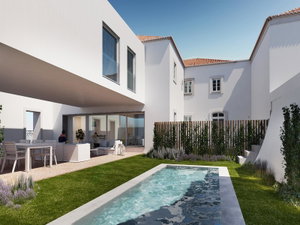
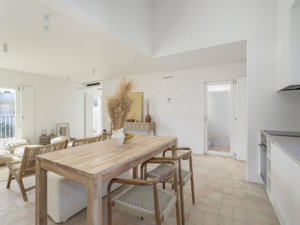
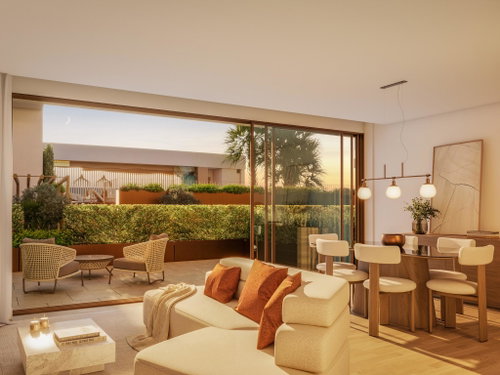
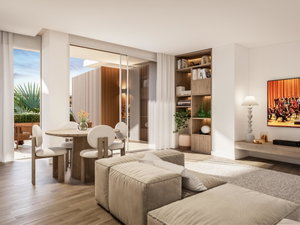
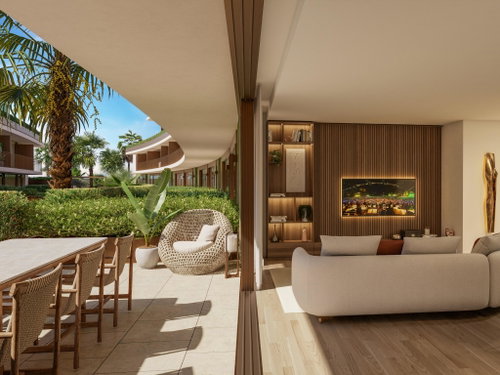
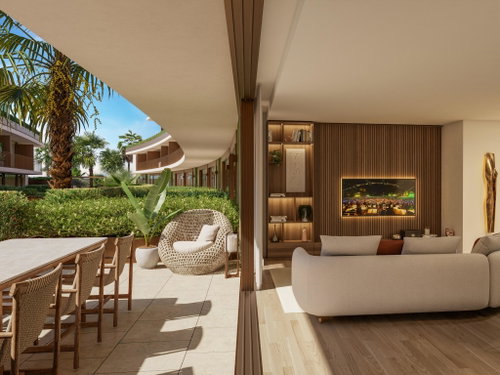
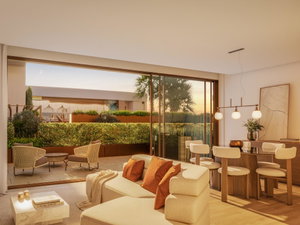
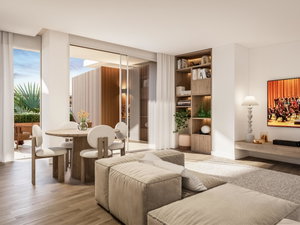
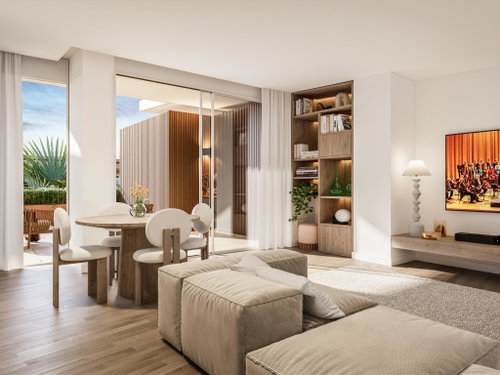
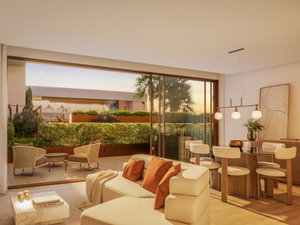
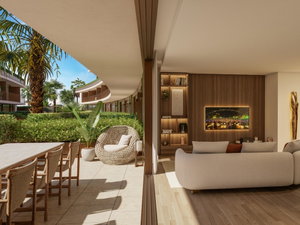
Tavira is the eastern Algarve's most distinguished town, a Moorish river port of whitewashed townhouses, 37 churches and the sand-island beaches of Ilha de Tavira. Fine Luxury Property advises buyers on restored townhouses, countryside quintas and contemporary villas across Tavira and the Santa Luzia fishing village.
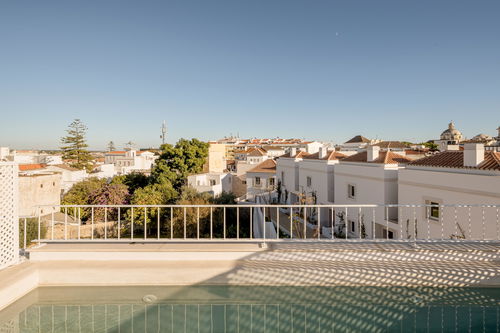
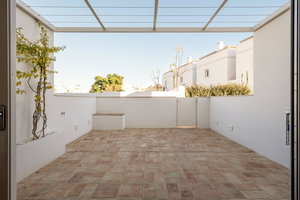
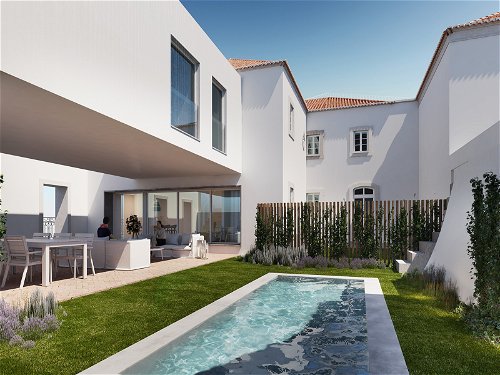
Whitewashed four-square Algarve townhouses with traditional chimneys and roof terraces, concentrated in Tavira centre and Santa Luzia, priced €450,000-€1.4 million for a fully renovated three-to-four bedroom home.
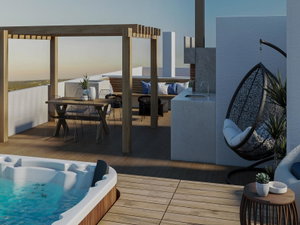
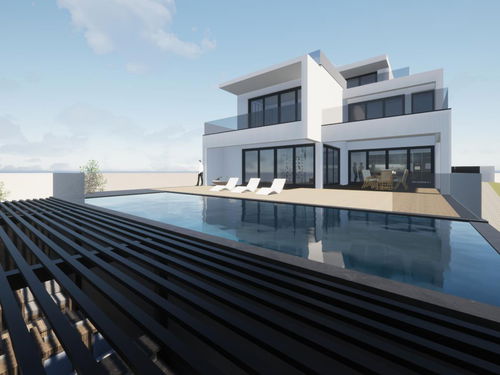
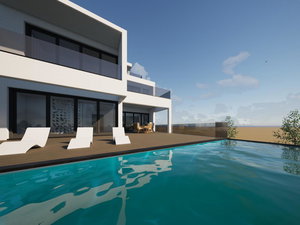
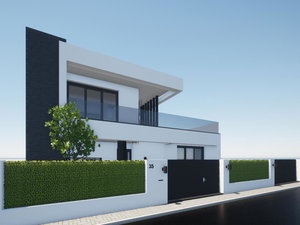
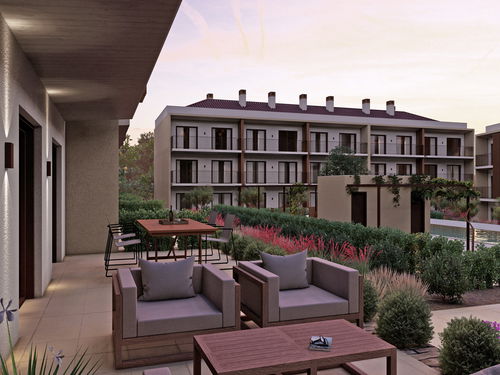
Detached villas with pools in Santo Estêvão, Santa Catarina da Fonte do Bispo and the pine-backed hills inland, typically on 1,500-5,000 m² plots, priced €750,000 to €3.5 million.
Beachfront and second-line properties on the Ria Formosa waterfront and overlooking Ilha de Tavira, with boat access and sea terraces, trading between €650,000 and €2.2 million.
Traditional quintas with orange, almond and fig groves across the eastern Algarve hinterland, often 5-30 hectares with restored farmhouses, priced €1.2 million to €6 million.
Fine Luxury Property operates as an AMI-licensed real estate agency serving the eastern Algarve from Tavira through Cabanas and Cacela Velha. Our multilingual team works in English, French, Portuguese and Dutch, handling NIF registration, IMT settlement, notary coordination and heritage-zone due diligence for buyers restoring townhouses in Tavira's historic core or building contemporary villas on rural plots inland.
Tavira retains one of Portugal's most intact historic town centres, with Moorish castle walls, 37 churches, a Roman bridge and distinctive four-water rooftops. Heritage rules cap new construction, protecting long-term scarcity of authentic character properties.
Tavira fronts the protected Ria Formosa lagoon and its barrier islands. Ilha de Tavira, reached by a 10-minute ferry from the town centre, offers uncrowded sand beaches unavailable anywhere on the central and western Algarve coast.
Tavira prices run roughly 30-45% below Quinta do Lago and Vilamoura on a per-square-metre basis for comparable build quality, with a slower tourist profile and a higher proportion of permanent residents, appealing to retirees and lifestyle buyers.
Tavira sits 35 km east of Faro airport, a 30-35 minute drive via the A22 motorway. The airport offers direct flights to most western European capitals, making Tavira accessible for both permanent residents and second-home owners travelling 20-30 times a year.
Tavira splits cleanly between historic townhouse renovations, coastal villas in Santa Luzia and Cabanas, and rural quintas in the serra foothills. We begin every engagement by matching the buyer's lifestyle brief, renovation tolerance and usage pattern to the right sub-market before shortlisting properties.
Foreign buyers need a Portuguese NIF and a local bank account for IMT settlement. We arrange both inside two weeks, plus certified power of attorney for clients completing remotely. Many Tavira transactions close without the buyer travelling to Portugal for the final deed.
Townhouses in Tavira's historic core sit under Câmara Municipal heritage rules that regulate facade colour, window type and roof tile. Rural land can include mixed urban-rustic classification with PDM restrictions. Lawyers verify every classification before the promissory contract.
A 10-20% deposit is paid on CPCV signature. For rural quintas, the municipality holds a right of first refusal on certain agricultural transfers, which adds 10-15 days to the process, and we brief buyers on timing at offer stage.
Final deed signs before a notary after IMT (0-7.5% sliding scale) and stamp duty (0.8%) are paid. Annual IMI in the Tavira municipality is 0.375% of the rateable value. Keys and utility transfers are arranged the same day.
Tavira's prime stock trades 30-45% below Quinta do Lago and Vilamoura per square metre despite similar climate, beach access and infrastructure, supporting progressive repricing as the eastern coast matures.
Tavira attracts a higher proportion of year-round residents than Albufeira or Lagos, with settled British, Dutch, French and German communities. This underpins non-seasonal demand and stabilises pricing through tourism cycles.
The Ria Formosa natural park covers 170 km² of protected lagoon, limiting coastal development across Tavira, Santa Luzia and Cacela Velha. This structural supply cap is unique to the eastern Algarve stretch.
Unlike purpose-built resort destinations further west, Tavira retains a working Portuguese town centre with genuine daily life, markets and tasca restaurants, a thesis that has become a distinct buying rationale for culturally-minded international buyers.
Renovated townhouses in Tavira's historic core run €450,000-€1.4 million, equating to €3,500-€5,500 per square metre. Villas with pools in Santa Luzia and Cabanas sit at €4,000-€6,500 per square metre, typically €750,000 to €2.2 million finished. Rural villas on 1,500-5,000 m² plots in Santo Estêvão and Santa Catarina trade at €3,000-€5,000 per square metre. Traditional quintas with orange and almond groves start at €1.2 million and exceed €6 million for larger estates with restored farmhouses.
Tavira sits in the eastern Algarve, fronted by the Ria Formosa lagoon rather than open Atlantic. The town retains its Moorish castle, 37 churches, a Roman bridge and whitewashed four-water chimneys, giving it the region's most intact heritage character. Tourism density is materially lower than Albufeira or Vilamoura, and permanent-resident communities are larger. The barrier-island beaches of Ilha de Tavira are uncrowded and reached only by boat, unlike the resort beaches further west.
Tavira historic centre suits heritage and townhouse buyers. Santa Luzia, a whitewashed fishing village five minutes west, is known for its octopus fishermen and seafront villas. Cabanas de Tavira, east of town, offers second-line beach apartments with ferry access to the barrier islands. Santo Estêvão and the hills inland attract buyers seeking rural villas with pools. Cacela Velha, further east, is a protected hamlet with dramatic lagoon views.
Tavira lies 35 km east of Faro airport, a 30-35 minute drive via the A22 motorway. Faro handles year-round direct flights to London, Dublin, Amsterdam, Paris, Frankfurt, Brussels and most major European capitals, plus seasonal long-haul connections. The train from Faro to Tavira takes roughly 50 minutes with a direct service, and a transfer taxi runs €45-€60. This airport proximity is a major factor for second-home buyers relative to locations further east around the Spanish border.
Tavira records around 300 days of sunshine a year, with average summer highs of 29-32°C tempered by Atlantic breezes off the Ria Formosa. Winters are mild, averaging 16-18°C daytime, with sea temperatures rarely dropping below 15°C. Rainfall concentrates in November-February and totals around 450-550 mm annually. The eastern Algarve is noticeably drier and warmer than the west coast around Sagres, and materially milder in winter than Lisbon or Porto.
Yes. Portugal imposes no restrictions on foreign ownership in Tavira. Buyers need a Portuguese NIF and a local bank account. Non-EU buyers can pair acquisition with D7, D8 or IFICI visas. Heritage-zone townhouses in Tavira historic centre face renovation rules but full ownership rights for foreigners are identical to citizens. Rural plots sometimes involve a municipal right of first refusal on agricultural transfers, which is procedural and adds 10-15 days to closing.
Closing costs run approximately 7-9% of the purchase price. IMT transfer tax is charged on a sliding 0-7.5% scale, meaningful above €101,917 for a primary residence and higher for second homes. Stamp duty is 0.8%. Notary and registry fees add 1-2%. Annual IMI in the Tavira municipality sits at 0.375% of the rateable value. Independent legal fees run 1% plus 23% VAT. Non-resident rental income is taxed at 25% subject to double-tax treaty relief.
Serving international clients in Tavira. Expertise in historic preservation, new developments, and investment properties across all neighborhoods.
Before you go · Portugal
Everything you need to know before purchasing property in Portugal, including taxes, NIF requirements, mortgages, legal considerations and the seven most costly mistakes overseas buyers make.
Free instant download. No obligation.
Send me the guide →